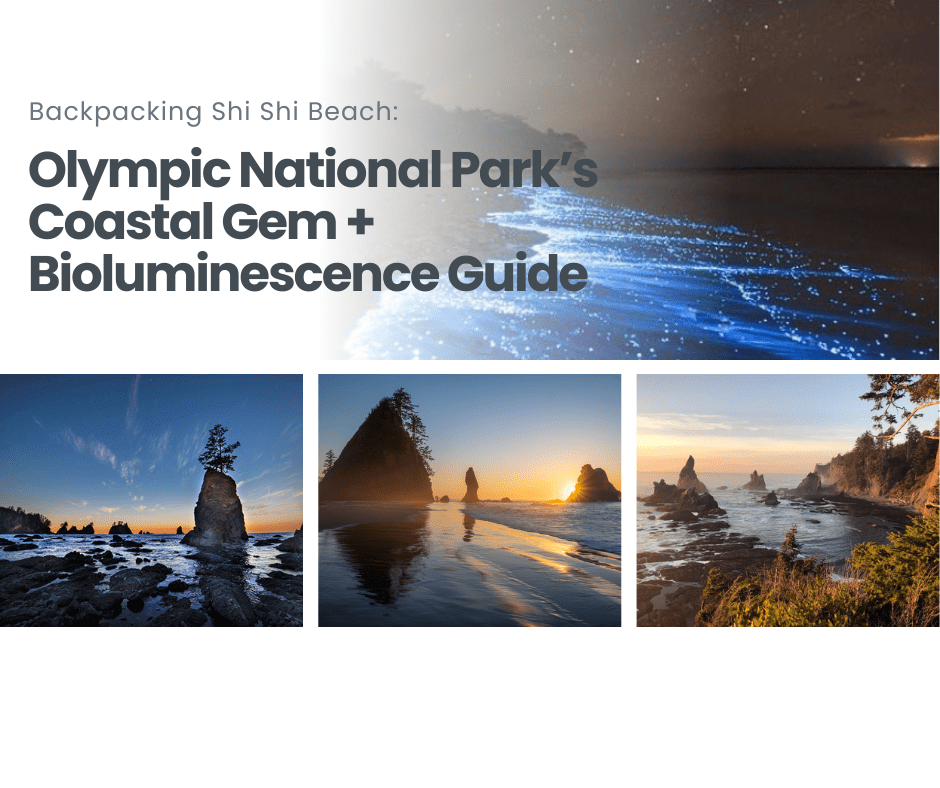
A trip to Shi Shi Beach Olympic National Park is perfect, if you want to get away from the hustle and bustle of city life, soak up time in nature instead! Keep in mind that Shi Shi Beach is not impacted by tidal barriers, unlike many other popular beach sites in Olympic National Park, which makes this travel spot more convenient and exciting! Even at high tide, you’re able to walk the whole length of the beach.
But, you’ll want to be mindful of and monitor the tides. First, make sure your tent is set up securely above the line of high tide. Secondly, to take advantage of low tide to investigate more than thirty sea stacks, tidal pools, and the Point of the Arches! Also, you should see the spectacular part of the Arches at the southernmost part of the beach.
Not to mention that the Bioilluminencense can be seen in the summer here too, it’s a total bonus! Come discover it!
Best Time To Go To Shi Shi Beach Olympic National Park
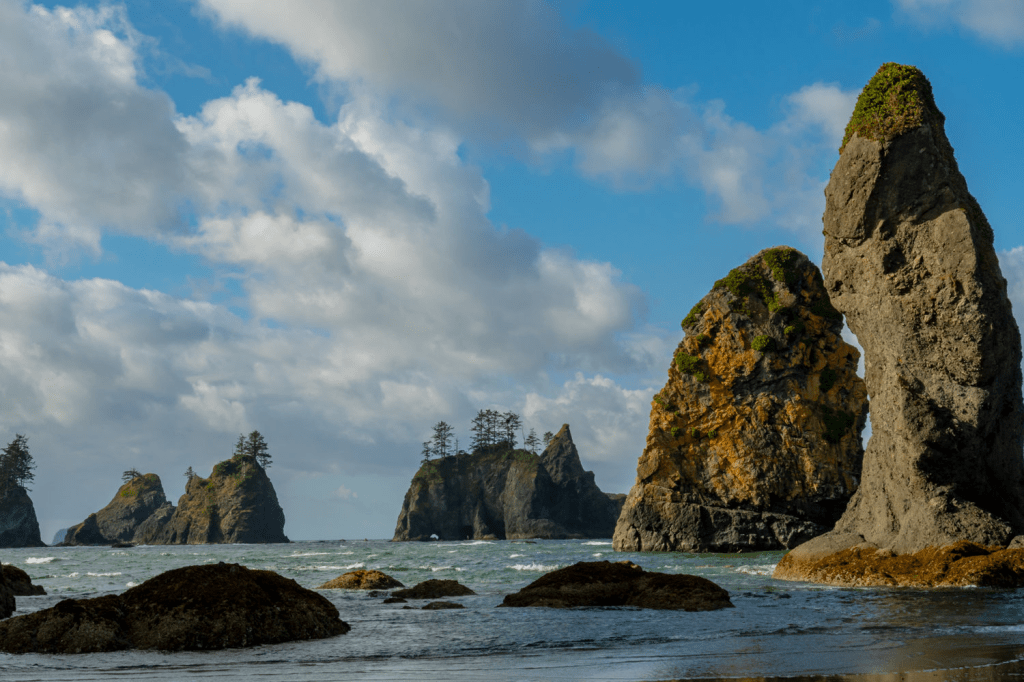
Expect heavy rains and winds from September to June, which makes for a less appealing time to explore. But from early July onwards, through September, you’ll have ideal adventure conditions. Overall, these months should bring a bright sky and pleasant weather. However, strong winds are a constant possibility around the Olympic shoreline, though, so be prepared for them. Most people from the PNW, like me, always pack layers. As Washington can have some temperamental weather changes and quick shifts.
Also, it’s also important to review tidal charts before heading to the beach, this will give you an idea of the height and timing of high and low tides. These are called tide charts, you can use these charts to determine the safe water levels to navigate headlands. Ultimately, you wouldn’t want to reach a headland just to find yourself stuck because of the rising water levels. Although not incredibly likely, the water can still be temperamental.
Packing Tips For Your Trip
When it comes to packing the essentials and ensuring that you’ve got the right gear for your trip, is a must! Having the right gear can be the difference between a trip you’ll love and a trip you’ll be sore on.
Extra Items, not mentioned specifically in that article, but are worth bringing;
Boots
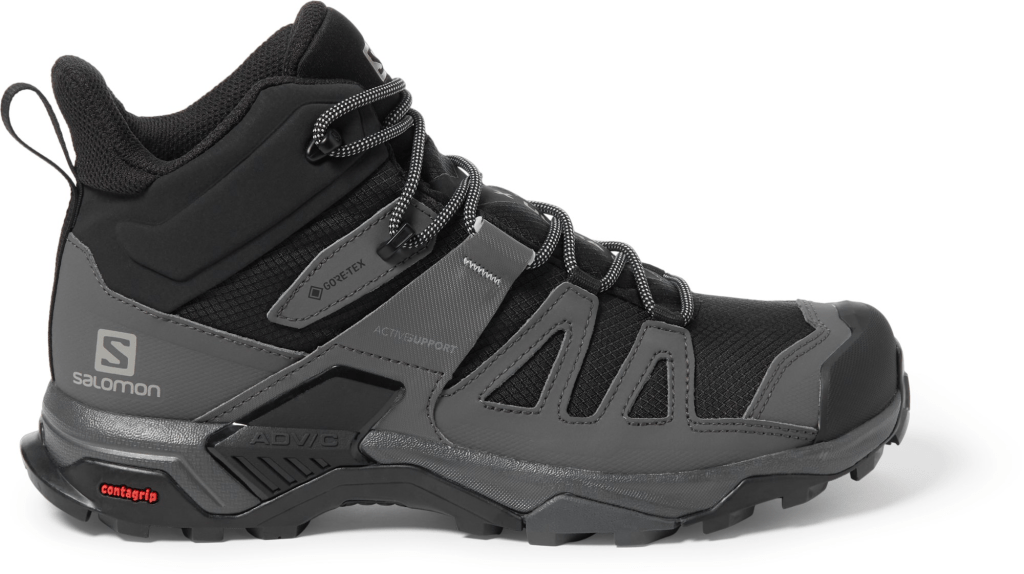
Make sure your footwear is suitable for the amount of muck that might accumulate on the trek. Thankfully, it’s only around a mile of dirt trails that turn into mud, and it’s not the whole trail. So, if prepped, you’ll have no worries and thank me later for this one: sturdy boots or rubber boots.
Sandals
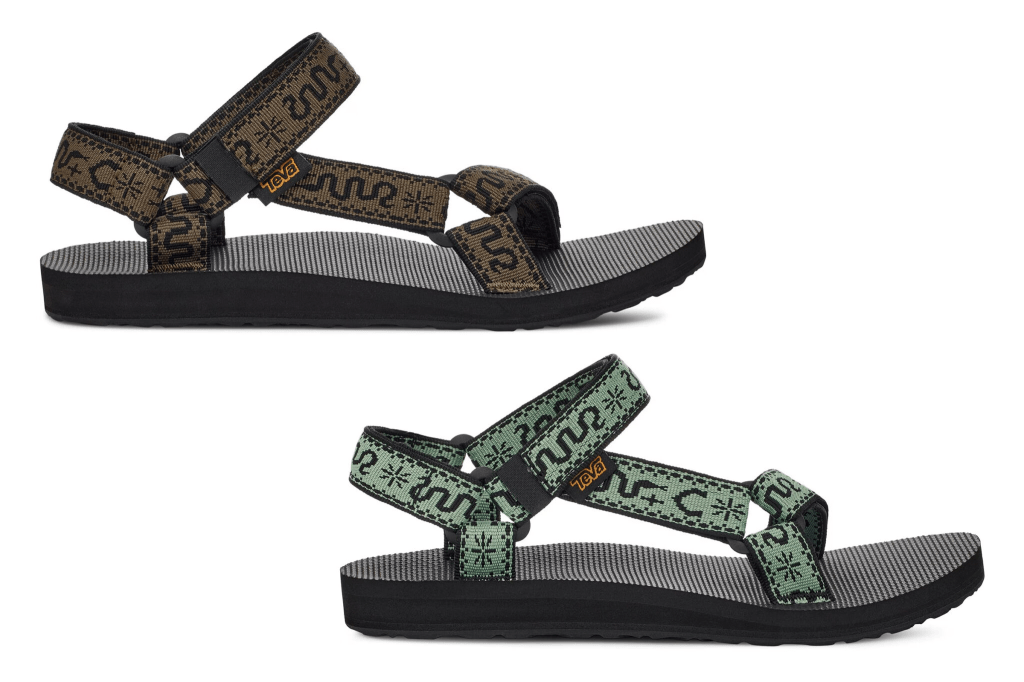
Since you’ll be right alongside the beach and probably exploring the tide pools, there’s a bit of shattered or broken seashells from the wildlife. So, to protect your feet, and give your feet a breather, be sure to bring sandals too.
Raincoat
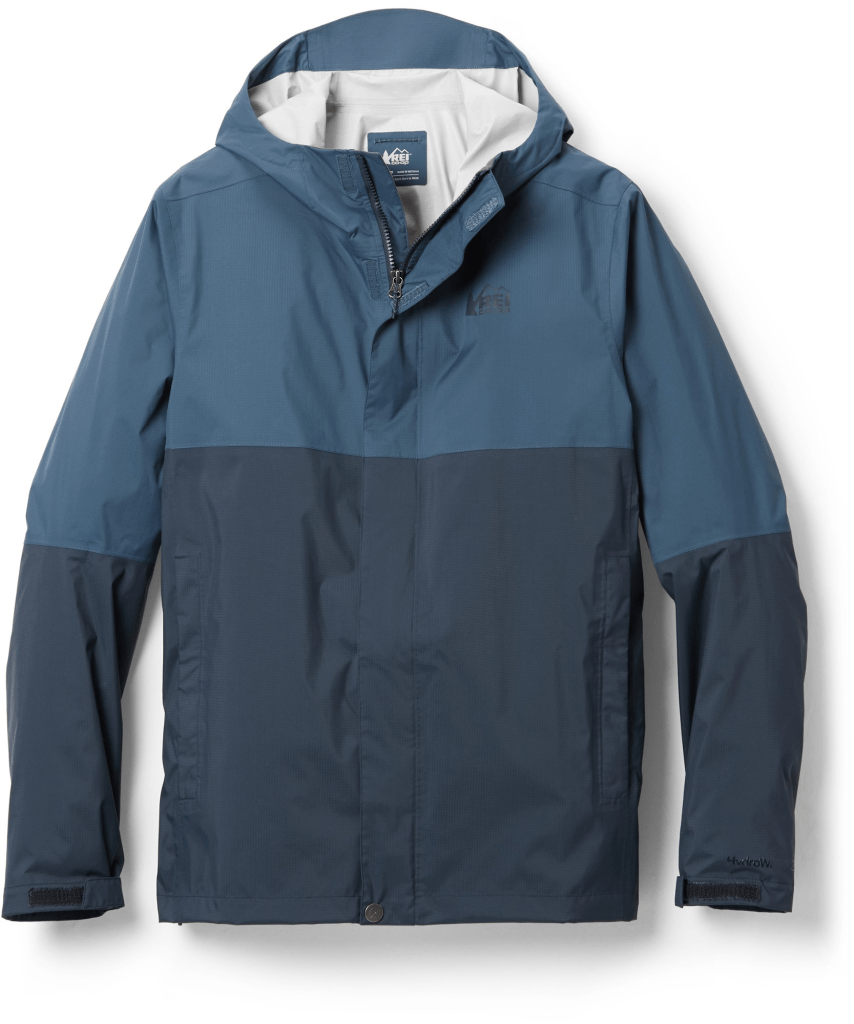
Well, this is the Pacific Northwest, so rain can happen at any point, regardless of what the weather report says! It’s better to be protected than to be wet. For some people, it’s a bit of a cool off and for others, they may just be plain miserable, so be sure to have a raincoat just in case!
Location & How To Get There From Nearby Cities & Airports
On the Olympic Peninsula, this beach is a hidden gem located in the north west part of the state of Washington, within the Olympic National Park. Whereas the trailhead for Shi Shi Beach is located close to the town of Neah Bay, a boating and tribal community in Washington.
Everett
Now that the Paine Feild Airport is in Everett, a whole new opportunity opens up. This means that the Edmonds ferry to Kingston is the easier route. Making the drive to just be about four and a half hours from the airport, through the ferry, and to the overnight parking.
Seattle
It normally takes four and a half to five hours from Seattle, depending on your route of choice and whether you wish to take the ferry. One option is to take the ferry from Edmonds through to Kingston, and then you’d drive from there to the Shi Shi overnight trailhead. Be sure to take into consideration that the ferry does stop running at about 11pm, and may fill up fast so try to not miss it!
Another option is to drive around and go down past Tacoma, it’ll take a similar amount of time to get the to trailhead, but you’ll instead spend the money on gas and time driving instead of spending that time one the ferry or waiting for the ferry. The cost of the ferry is around $20 per vehicle and a little bit more per person.
Portland Oregon
Traveling from Portland, Oregon, to the trailhead will be a bit closer to six hours or so, and you can drive straight up without having to take any sort of ferry.
Permits & Fees For Shi Shi Beach Olympic National Park
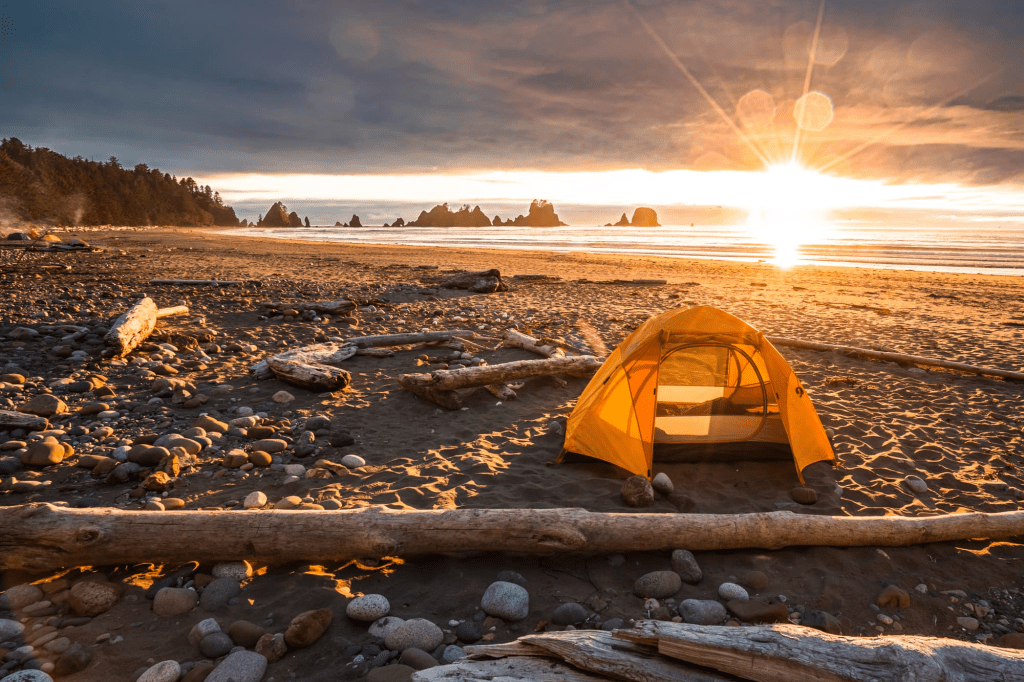
Overnight National Park Permit: A permit is required in order to camp at Shi Shi Beach. Don’t worry, though; Recreation.gov has this available. To check the availability of Shi Shi Beach permits, just choose the number of people in your group and navigate to the “North Coast” option. It’s around $8 per person each night, and then a $6 processing fee too.
Here are the steps:
- Go to recreation.gov
- Search “Olympic National Wilderness Permits”
- Click on the “North Coast” tab to see the availability for Shi Shi Beach permits.
- Select the number of people in your party
Then can pick up your wilderness permit in person at the Wilderness Information Center (WIC) in Port Angeles or at the Lake Quinault Ranger Station. Conveniently, you can also print them out online! Before you pick up your permit, you can also call the WIC (360-565-3100) to check on hours and trail conditions before heading out to the Olympic Peninsula.
Also, you must have a copy of your permit visible on your backpack or in an accessible pocket to share with a Park Ranger.
Bear Safe Canister: Always remember to bring your bear-safe canister! Every camper in Shi Shi Beach has to have it. This canister is mostly meant to keep racoons and other animals away from your food.. Fortunately, when you pick up your permit at the Port Angeles visitors office, you may rent one for free. When you’re finished, you may either stop by Quinault’s visitors center or return it to the same location.
Just keep in mind that you have to plan your trip around the open and close times of the visitor’s office though, if you’re planning on using their’s. Plus, you’ve got to hope that all your food will fit, and they only have one size. I’d personally recommend just buying one to have for yourself and your future trips, to give yourself more flexibility and allow for better prep.
The Wilderness Food Storage Policy for the National Park now requires all backcountry campers along the whole coast to keep their food in bear canisters. A bear canister does need to be used with some planning. Every scented object, including food scraps and toiletries, has to be safely kept in the canister at night or when you’re not using the camp, such as on a day trip. You have to choose light and portable meals and simply pack necessities to make things easier
Makah Tribe Reservation Permit: An additional need that will cost you $20 is a Makah Recreation Pass and is good for the whole year and per vehicle – it’s not mandatory to write the license plate on it. They mostly want to make sure that you just have the permit.
Here’s where you can get the Makah Recreational Permit:
- Visitor Center
- Makah Marina
- Makah Mini Mart
- Hobuck Beach Resort
- Makah Museum
- Pats Place
- Village RV Park
- Cape Resort
Overnight Parking Fee: Finally, don’t forget about parking! There is a parking fee for your overnight stay! You’ll be spending $30 overall if you’re staying for a weekend (Friday to Sunday), since it costs $10 each day: $10 for the day you arrive, $10 for the day you depart, and $10 for any further days. (Be sure to bring enough cash!)
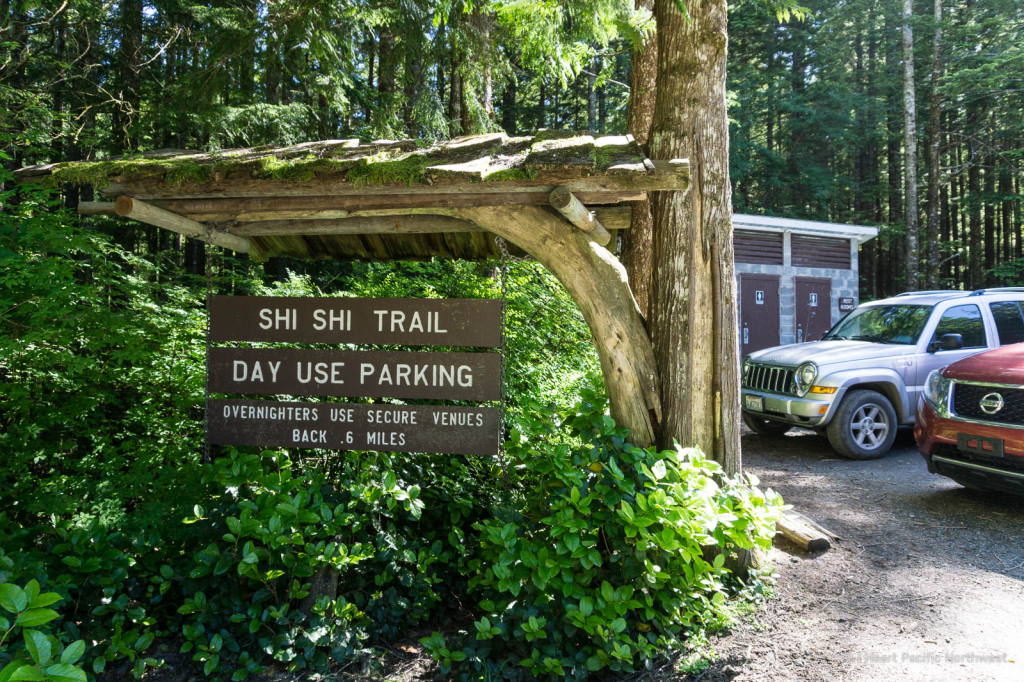
The parking is actually on someone’s private property, they’ll check you in, accept your payment, and guide you to your space. They are part of the Makah Tribe in the area, are super nice, and even have an outhouse for visitors.
Water Availability In Shi Shi Beach Olympic National Park
Willoughby Creek and Petroleum Creek are the main sources of water for Shi Shi Beach. Coming from the coastal forest and wetlands, Petroleum Creek is known for its steady flow throughout the year, but not everyone will appreciate its tea-colored look. Some choose to mix electrolyte powder into their water to cover up the hue. It’s crucial to remember, though, that nearby streams have been known to have parasites like giardia and cryptosporidium, and Iodine doesn’t work against these parasites, therefore you should boil or filter your water before drinking it.
I’ve got a couple of great options for filtering, one being this Katadyn Filter. Which physically removes particles, protozoa and bacteria down to 0.2 microns in size, including giardia, salmonella, cryptosporidia and others. Be sure to also pair it with this UV sterilizer pen.
Another one of my favorites is this water bottle press that’s both a filter and sterilizer. It’s also great for traveling!
Backpacking Shi Shi Beach Olympic National Park
Alongside the northern Olympic Coast, backpacking Shi Shi Beach (pronounced shy shy) provides an 8 -10 mile round-trip trek, including miles of sandy beach, and a 600 ft. elevation gain. Which makes this a great beginner backpacking trip or even a great trip to start the backpacking season.
Above all, backpacking allows you to discover the beach at low tide and witness magnificent sunsets, in addition to allowing you to enjoy more of the area’s natural beauty at your own pace.
Starting To Backpacking & Trail Conditions
When it comes to any backpacking trip, I always recommend starting early morning. This will ensure that you’re packed, prepped, and allowing plenty of time for taking the ferry and driving. Considering just driving there can be a few hours, depending upon where you’re coming from, and the ferry is about 45-60 minutes. Plus, you’ll also want to take into consideration, that you’ll need to also navigate getting the permits, and parking too. Which is going to take time.
Although this backpacking trip is really easy overall, it may get extremely muddy. Therefore, I would highly recommend you to wear waterproof hiking shoes or, at the very least, rubber boots to keep your feet clean and dry.
First, you’ll walk from the overnight parking on a paved road for about a half mile or so. Then you’ll begin trekking on a well-maintained trail with strong wooden bridges. The fascinating part begins here, though, as those bridges disappear after about a mile, leaving you in a rather muddy situation. But others have kind of carved out the side of the tail to the left and right to walk outside of the mud, and you can too.If you’re feeling really daring and don’t mind making a little mess, just walk on through. That’s half the joy of trekking, isn’t it, winding up covered in mud?
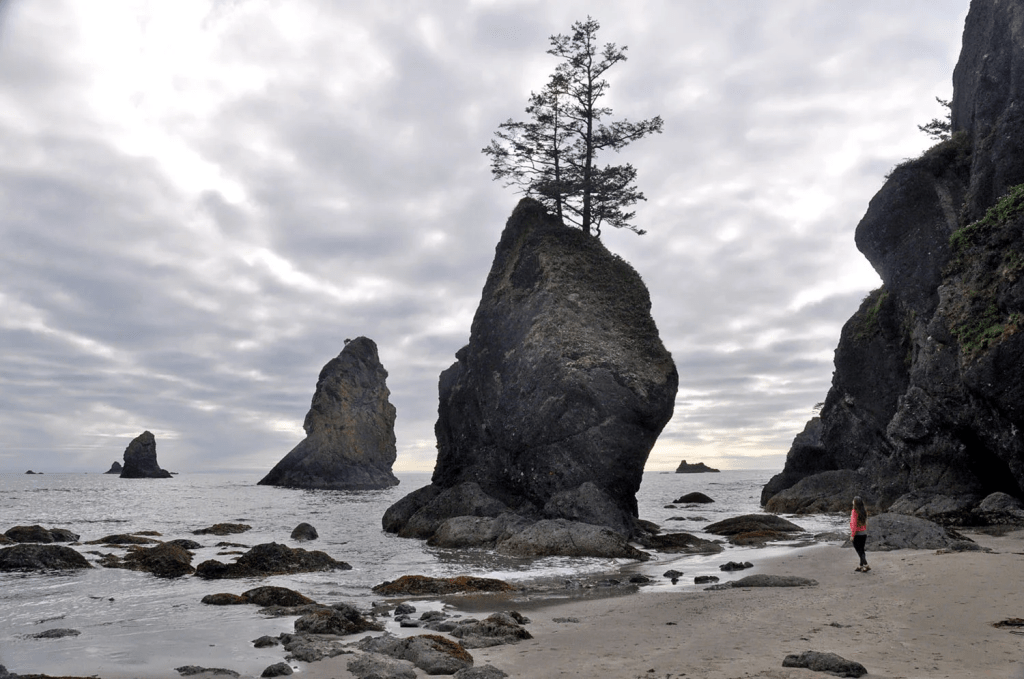
Many of the paths that veer off to the left and right, also have a touch of elevation and even offer some beautiful views of the Point of Arches, the crashing waves, sea stacks, and even some ocean animals too.
The Makah Indian Reservation makes up most of the walk, and you’ll enter the National Park right before you reach the shore. As you get closer to shore, you’ll encounter some switchbacks, stairs, and ocean trash-turned-decor.
Setting Up Camp
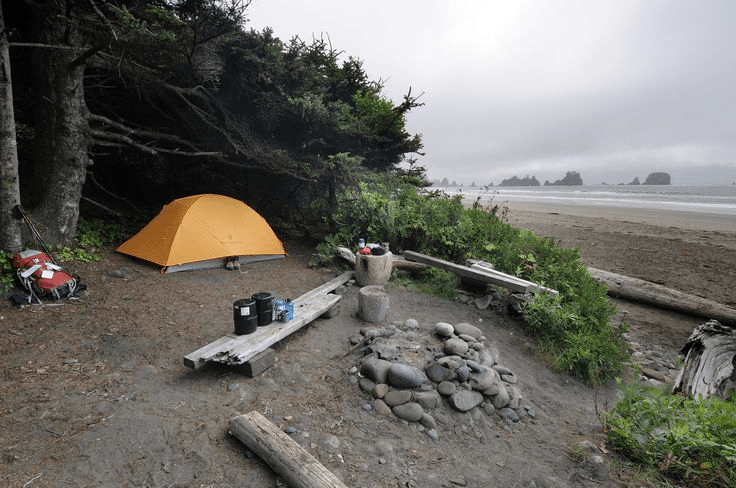
As you finish trekking through the switchbacks and stairs, you’ll reach a small brush of forest, head to the left, and walk the path/trail. This will lead you to the beach and most of the campsites, as well as the where the Point of Arches is.
When choosing a campsite, the first handful of campsites are going to be quite busy from all the foot traffic, and get a bit noisy. Whereas being by the ocean will be a bit more calming and resetting. There’s nothing more peaceful than hearing the ocean.
If you’ve decided to pack in most, if not all of your water, then you don’t need to really consider a water source. However, if you’re packing ultra light, there’s a couple campsites that are next to creeks that you’d be able to filter from. (Willoughby & Petroleum Creek)
As for the other campsites, there’s plenty that are straight on the sand, and some even have a slight platform, to raise them slightly above the shore. It’s quite a bit more comfortable, it can get hotter in the summer, but you’ll still have the sea breeze.
There are some campsites closer to the Point of Arches and tide pools, simply stroll outside your tent to take in the amazing scenery.
Exploring The Beach, Point of Arches, and Tide Pools
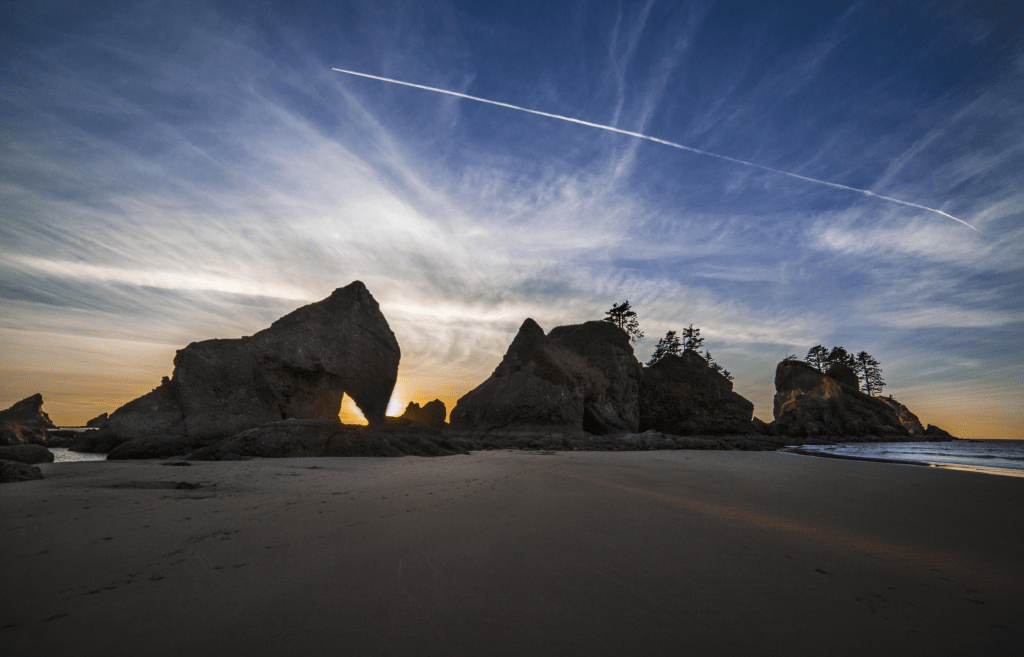
No matter the time of day, you’ll be treated to the most amazing views of the sea stacks silhouetted against the light. It glows especially bright during the sunset. Just keep in mind the low and high tides, as these will impact your ability to go and explore the tide pools. (Quick Tip: Usually midday is a bit easier to get a peak in and explore!) Again, be sure to 100% check these tide charts for your safety, you can also screenshot them, write them down, or print them alongside your permit.
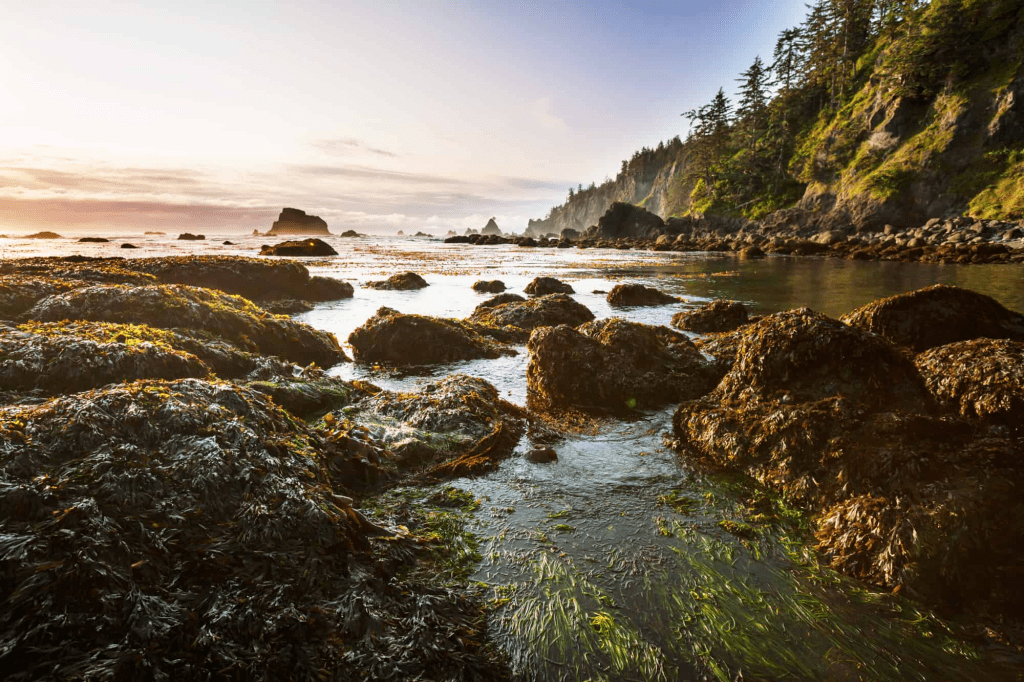
In these tide pools, you’ll have the opportunity to see crabs, starfish, sea anemones, and many other marvelous sea creatures. The colors of them are just gorgeous!
Shi Shi Beach Olympic National Park: Bioluminescence
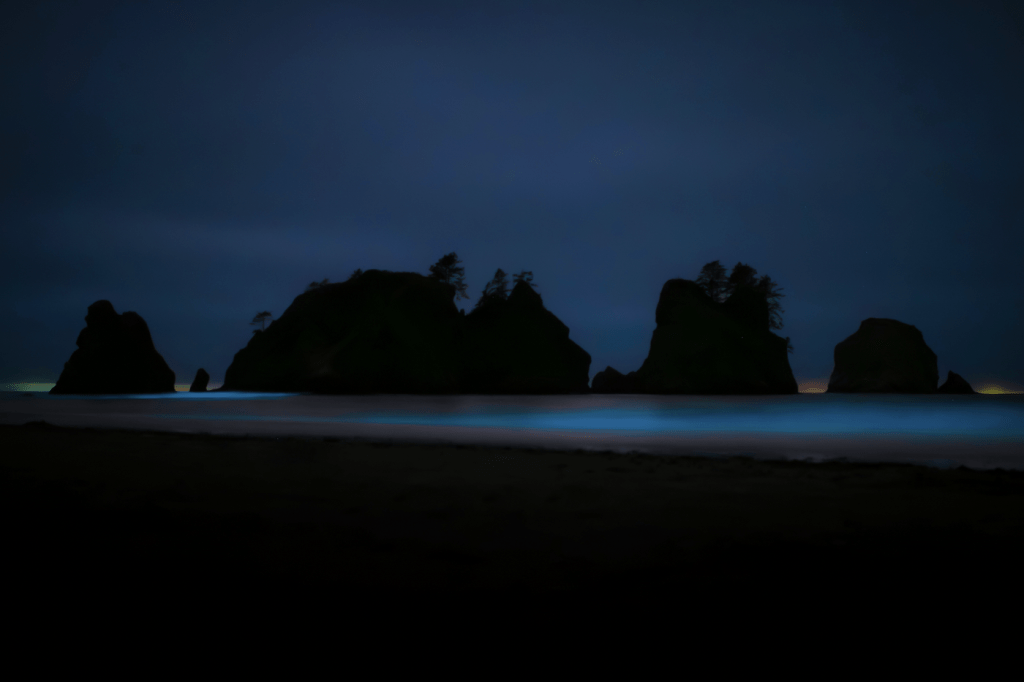
Who doesn’t love bioluminescence? Imagine a calm night at the ocean, with soft waves crashing in. A beautiful scene opens up as night falls on the surrounding area. Really, isn’t it beautiful? At Shi Shi Beach Olympic National Park, bioluminescent algae transforms the ocean into a captivating display of vibrant blue-green light. The water changes into a breathtaking scene of light waves, and the sand beneath your feet shimmers like a starry sky as you walk. This mesmerizing display of nature’s own light show will captivate you as you stare up at the majesty of the night sky.
Some nights shine brighter than others though, so please keep that in mind! The night that I chose to see the bioluminescence, I could only see them when I stomped through the water or splashed the water with my hands. It seems like the friction or physical vibrations got them to glow more. I also had to be about half calf deep in the water too, and it was COLD! Ha! But still beautiful.
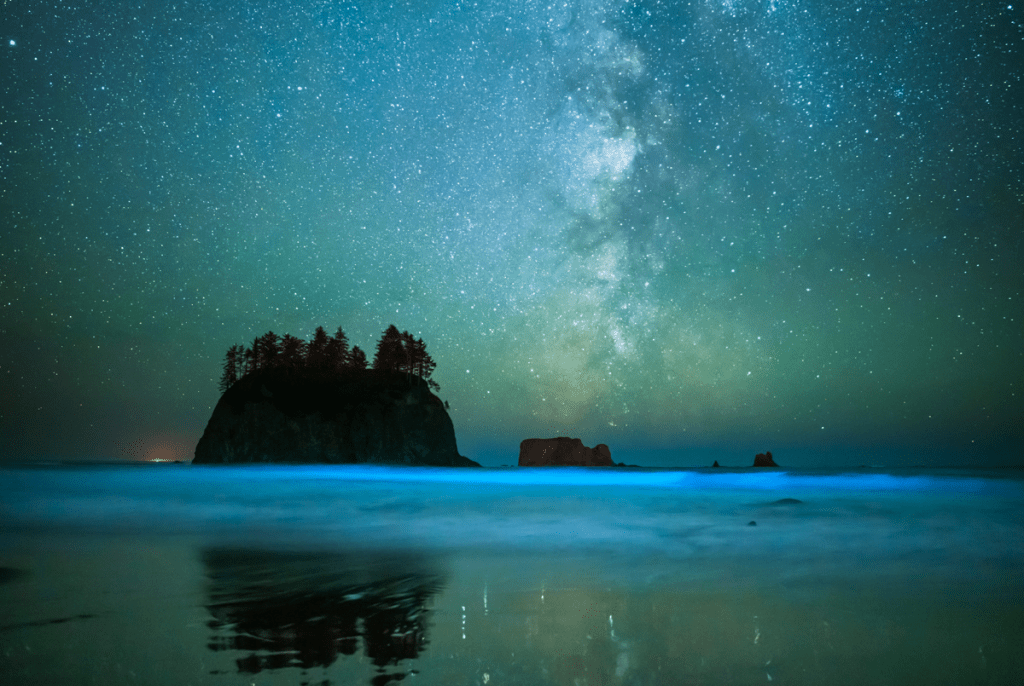
As for bioluminescence, there’s absolutely no light pollution. So, the algae glows, and when there’s a new moon, even the Milky Way is visible. From May to September, when it’s warmer the bioluminescent algae thrive even more, glowing even brighter.
Shi Shi Beach: An Experience that Lasts in Olympic National Park
Are you prepared to set off on a journey into a place where time appears to stop and the beauties of nature reveal themselves at every turn? Remember that excitement comes as you make your way through the forest, woodlands, and coastal paths. Offering peace, rest, and serenity as you backpack Shi Shi Beach National Park. It’s waiting for you!

 Travel Articles
Leave a comment